The Anthropocene’s Post-Oasis: Designing Nature and Landscape in Southern California, 1945–65
Nicole Theresa King
Visual Arts
UC San Diego
My dissertation examines how design practices in twentieth-century Southern California produced new cultural landscapes—and how they continue to shape emerging ecological imaginaries. Focusing on three typologies—residential garden, city park, and a desert ecological habitat—the study investigates how horticulture and architecture employed what I call the “oasis paradigm:” a colonial design logic promising abundance and refuge amid ecological precarity. In this framework, landscape operates not only as an aesthetic or symbolic form but also as an envirotechnical system through which relations between leisure and extraction, technology and ecology, are mediated. The project traces how modernist design contributed to a regional climate identity grounded in botanical remaking and horticultural exceptionalism. By examining the interplay of techno-capitalist forces and eco-romantic investments in human-made “nature” that converged in the Anthropocene, this historical study shows how crisis renders the political and material scaffolding of engineered landscapes newly visible. By bringing horticultural infrastructures to bear on design and visual culture, the dissertation reframes Southern California modernism’s environmental promises as strategies of ecological containment and mediation that continue to structure how climate and crisis are seen—against the myth of California as modern architecture’s perfect oasis.
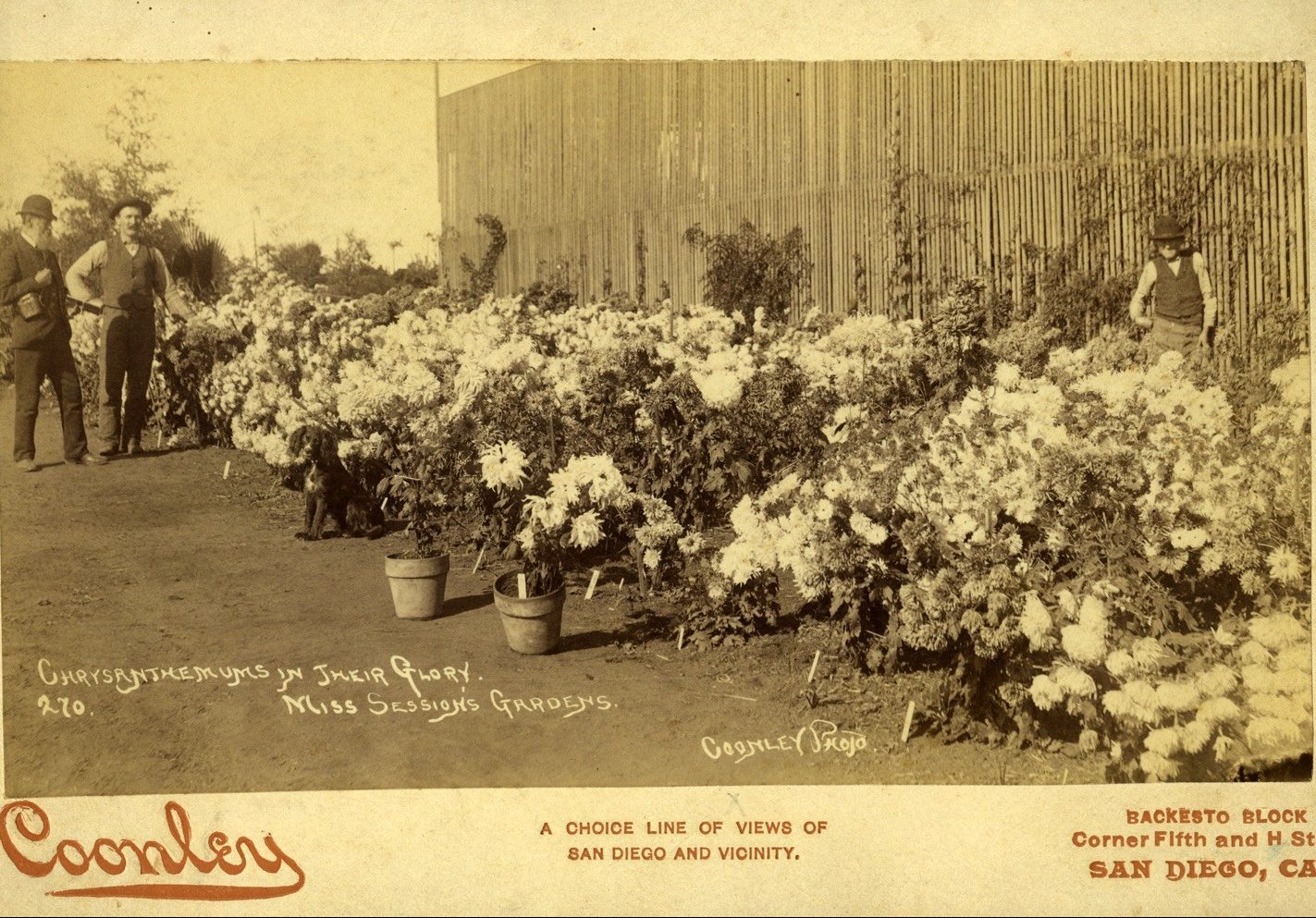
Image credit: Photograph by Henry Ellis Coonley. OP 8004, Photographic Collection, San Diego History Center.