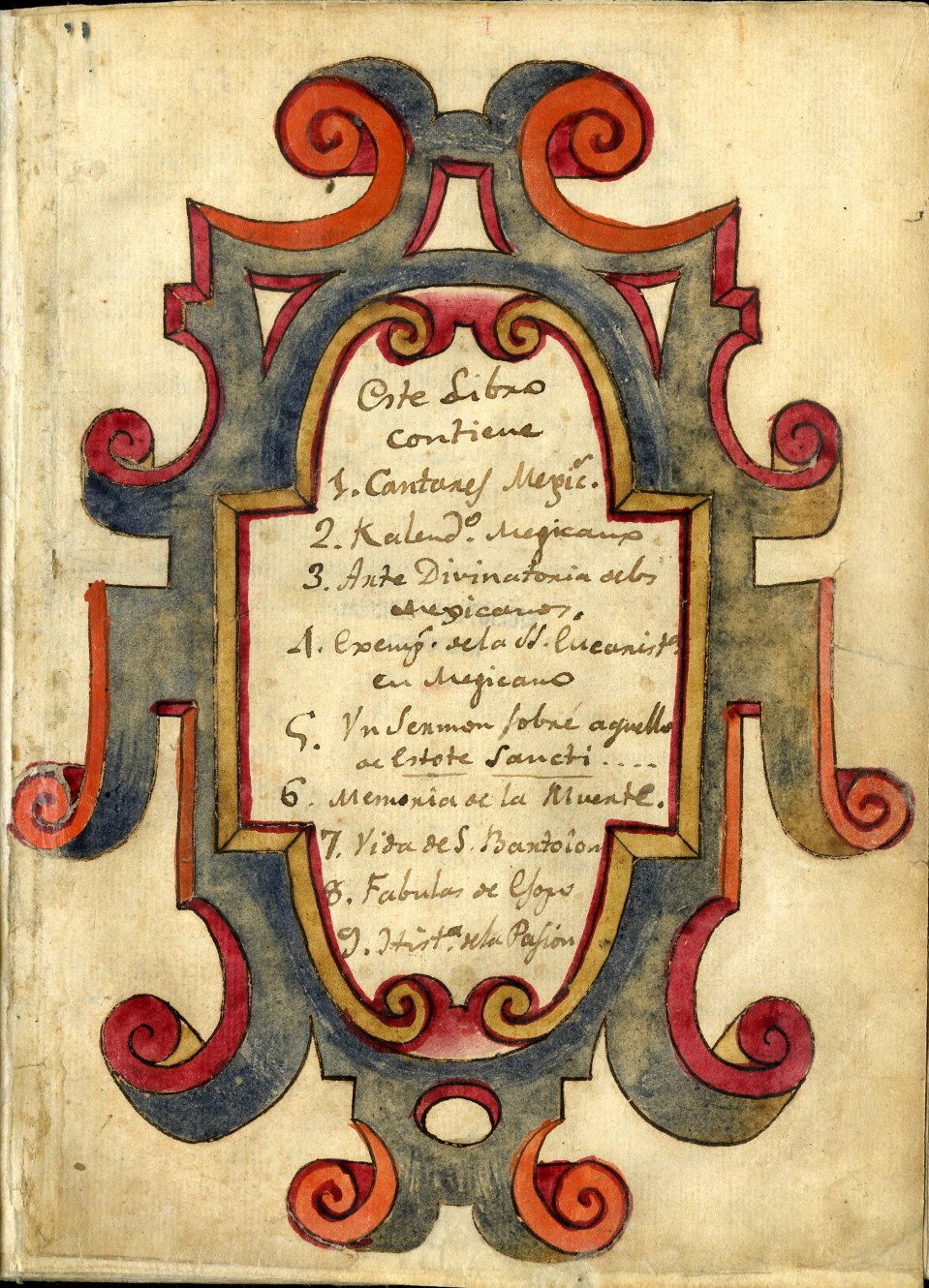
The Literary Discovery of Aztec Poetry (1826-1941)
David Colmenares
Comparative Literature
UC Irvine
This project chronicles the literary discovery of Aztec song in the long nineteenth century by following the Cantares Mexicanos manuscript—the most important sixteenth-century collection of Aztec poetry—through its paradoxical existence in modern Mexico: simultaneously hailed as “the most important document on Mexican antiquity” yet constantly lost, misplaced, or postponed. My book, A New String for the Mexican Lyre (under contract with Vanderbilt University Press), decenters traditional accounts of Indigenous literatures by foregrounding the transnational network of scholars at the intersection of Amerindian linguistics and comparative literature who made the literary discovery of Aztec poetry possible. A hallmark of this study is its recovery of nineteenth-century Indigenous Mexican intellectuals—Faustino Chimalpopoca Galicia, Mariano Sánchez Santos, and Mariano Jacobo Rojas—whose integral roles in modern Mesoamericanism were obscured by later historiography. With summer research at the New York Public Library’s Monumentos Guadalupanos collection and archives across Mexico (Mexico City, Puebla, Guadalajara, Tepoztlán), I complete crucial chapters on Chimalpopoca Galicia’s pioneering translations and regional Indigenous scholarly networks.
Image credit: 18th-century book title page of MS 1628 bis (Biblioteca Nacional de México), generally known as the Cantares mexicanos y otros opúsculos.