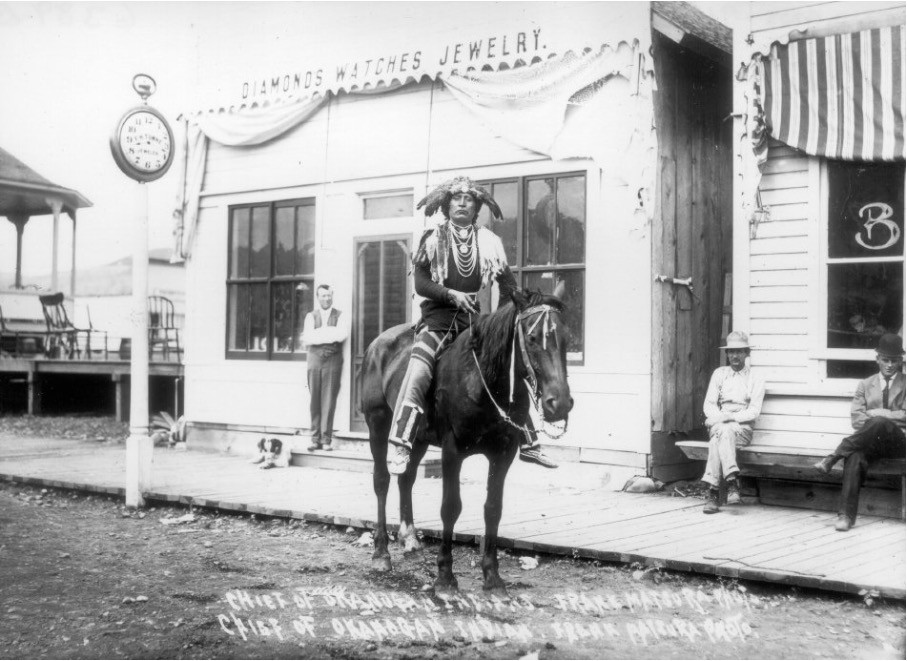
Frank Matsura’s Okanogan Sublime: Immigrant Photography, Settler Colonialism, Native Survivance as Sustenance
Glen Mimura
Film and Media Studies
UC Irvine
This project examines the little-known work and career of Frank Matsura, who immigrated from late Meiji-era Tokyo to central Washington state in 1903, and extensively photographed the longstanding Native and white settler inhabitants, landscapes, and modernization of Okanogan County and the Colville Indian reservation. His style and perspective depart strikingly from the canon of Western photography, particularly its nation-building and expansionist nostalgia and ‘Vanishing Indian’ discourse, wistfully mourning the ostensible biological and cultural extinction of Native peoples. Instead, Matsura’s Japanese photographic influences conjoined with Native self-fashioning to produce a playful, ironic, and Native-centered style and record of what Anishinabe writer Gerald Vizenor calls “survivance”: “renunciations of dominance, tragedy and victimry” and the “active sense of presence, the continuance of native stories, not a mere reaction, or a survivable name.” As a mode of sustenance, Vizenor’s survivance is irreducible to the existential degree zero of survival and instead alludes to Native epistemologies and practices––ways of being and becoming, knowing and doing––that not only ‘resist’ settler-colonial modernity, but suggest alternatives to it: human, more-than-human, and environmental relations and economies of sustainability, visibly expressed by Matsura’s counter-archive of the settler-colonial encounter.