Refuse(d), from Bagram: On the Transnational Supply Chains of War, Labor, and Art
Najwa Mayer
Asian American Studies
UC Davis
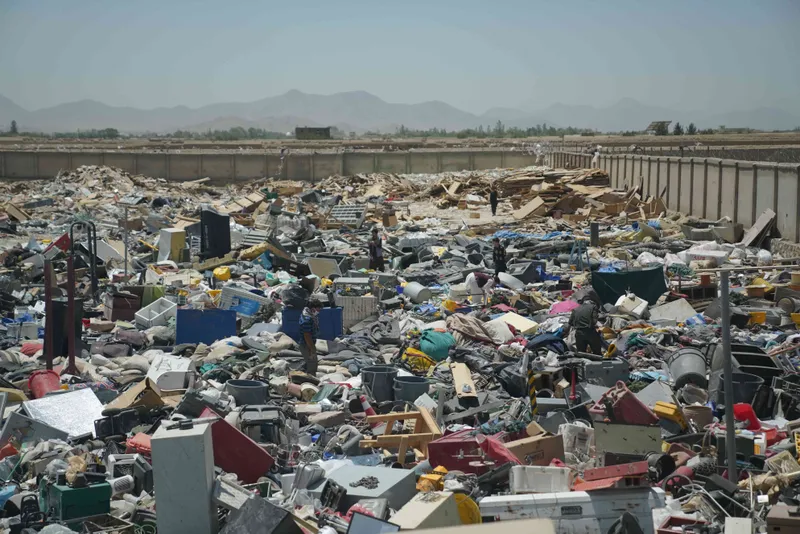
In 2022, the Afghan refugee artist Aziz Hazara shipped twenty tons of U.S. military-generated waste from Bagram Airbase, the largest U.S. base during its twenty-year occupation of Afghanistan, to the United States. While Hazara’s delivery was a performance artwork and political critique of weaponized waste, it also constituted an international project that redistributed the refuse of U.S. militarism, post-withdrawal. Commissioned by Carnegie International, the artwork revalued military waste in Afghanistan as Western-sponsored refugee performance art, re-circulated for global market consumption. My research examines how refugee aesthetics and the refugee artist-laborer are materially produced and valued within distinct yet interconnected supply chains of war, refugees, and art in the Global War on Terror. I conduct interviews with Hazara and analyze his studio, archives, and artworks, combining formal analysis with social scientific methods. My outputs include a peer-reviewed journal article toward a book project and a public event. This research engages UCHRI’s theme by examining through refugee aesthetics how sustenance and its relations to material sustainability emerge within uneven transnational political and economic structures. Afghanistan’s recent history as a site of continuous imperial wars and military waste for nearly five decades has engendered multiple forms of economic, national, and ecological unsustainability.
Image credit: Aziz Hazara, from “Coming Home” (2020- ), reproduction in ARTnews